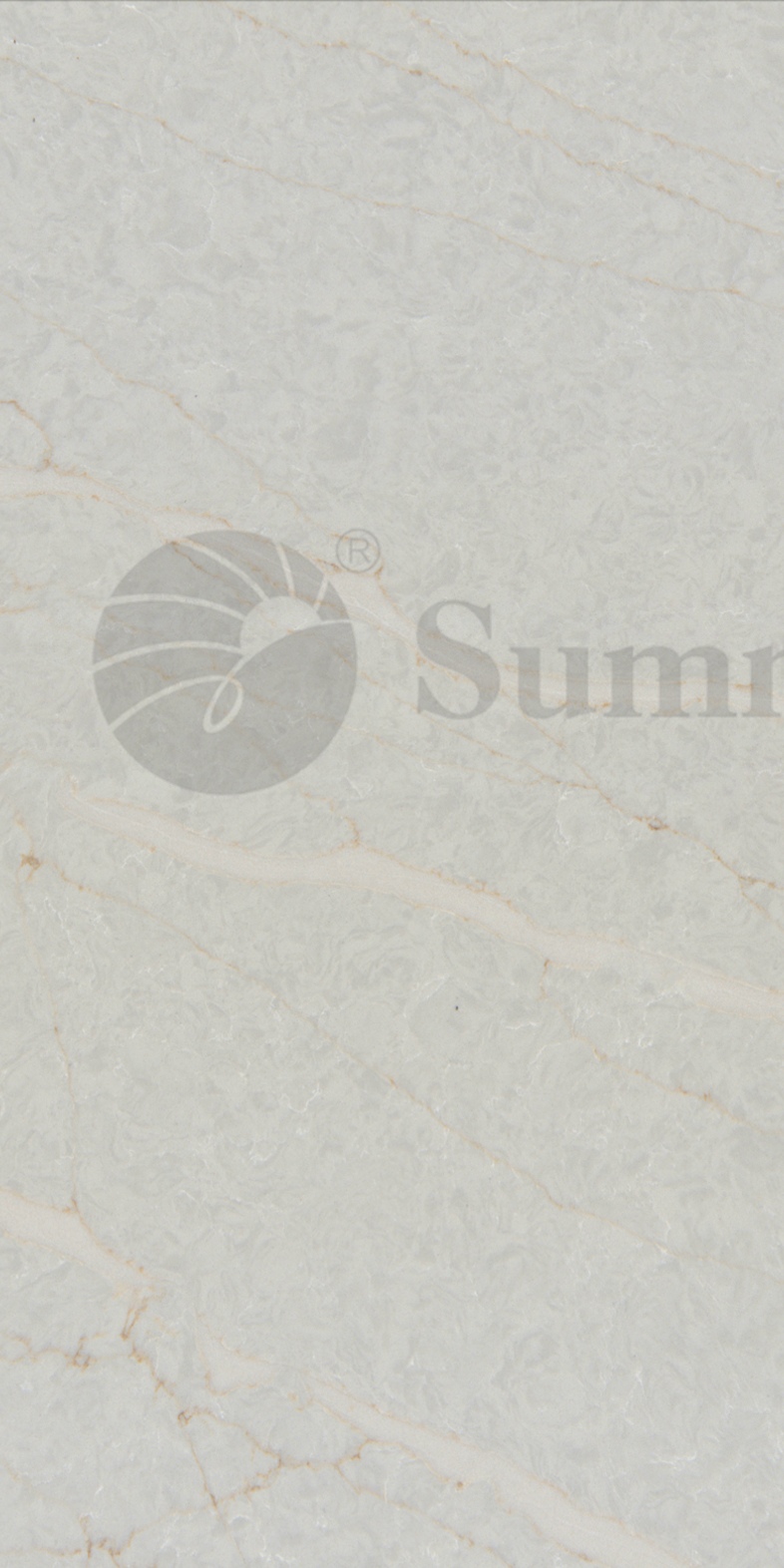
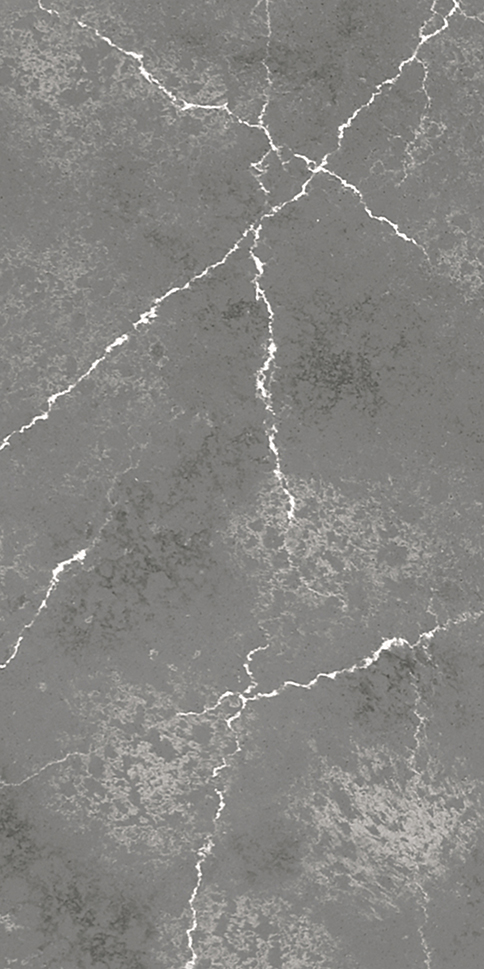
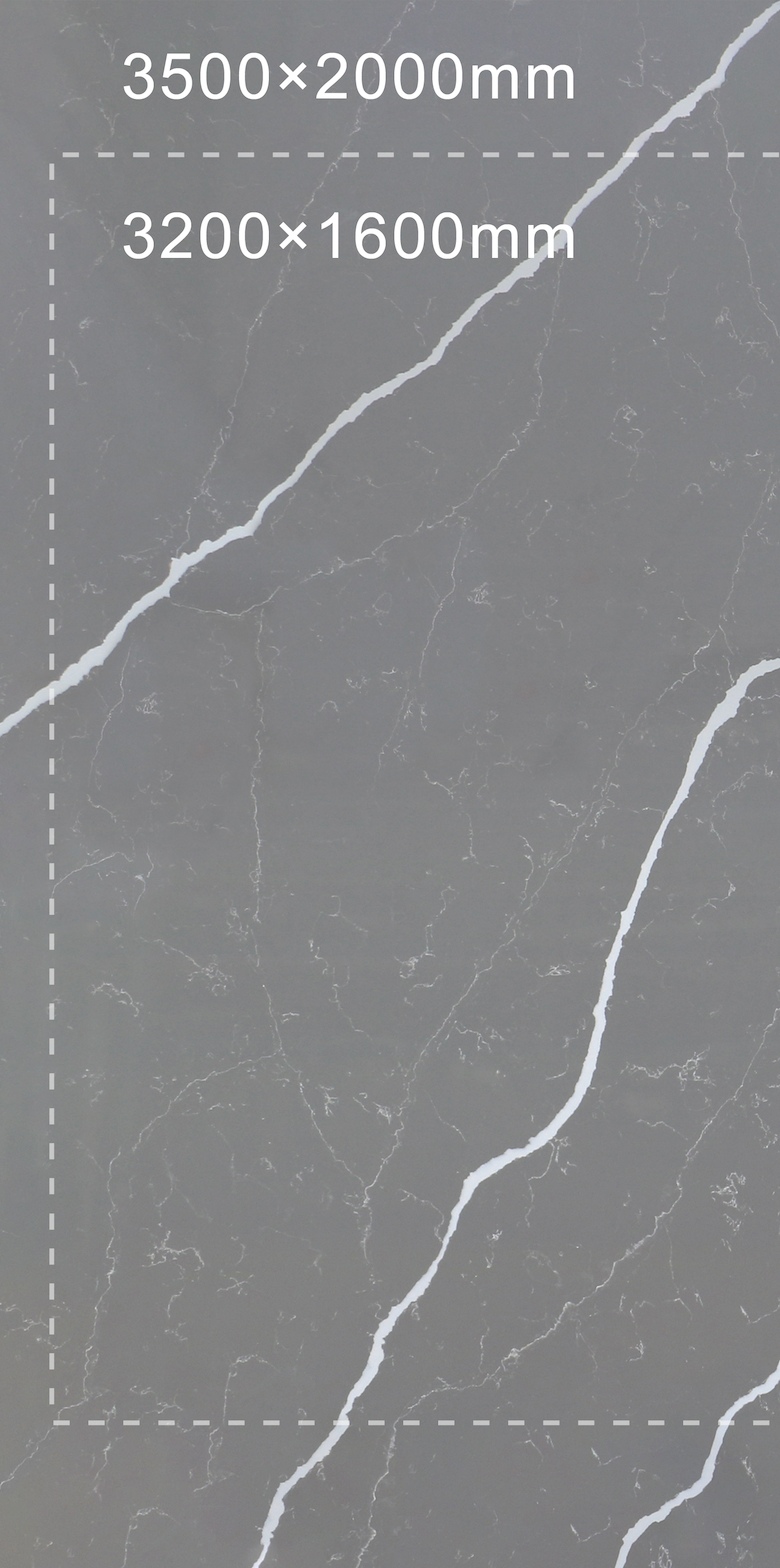
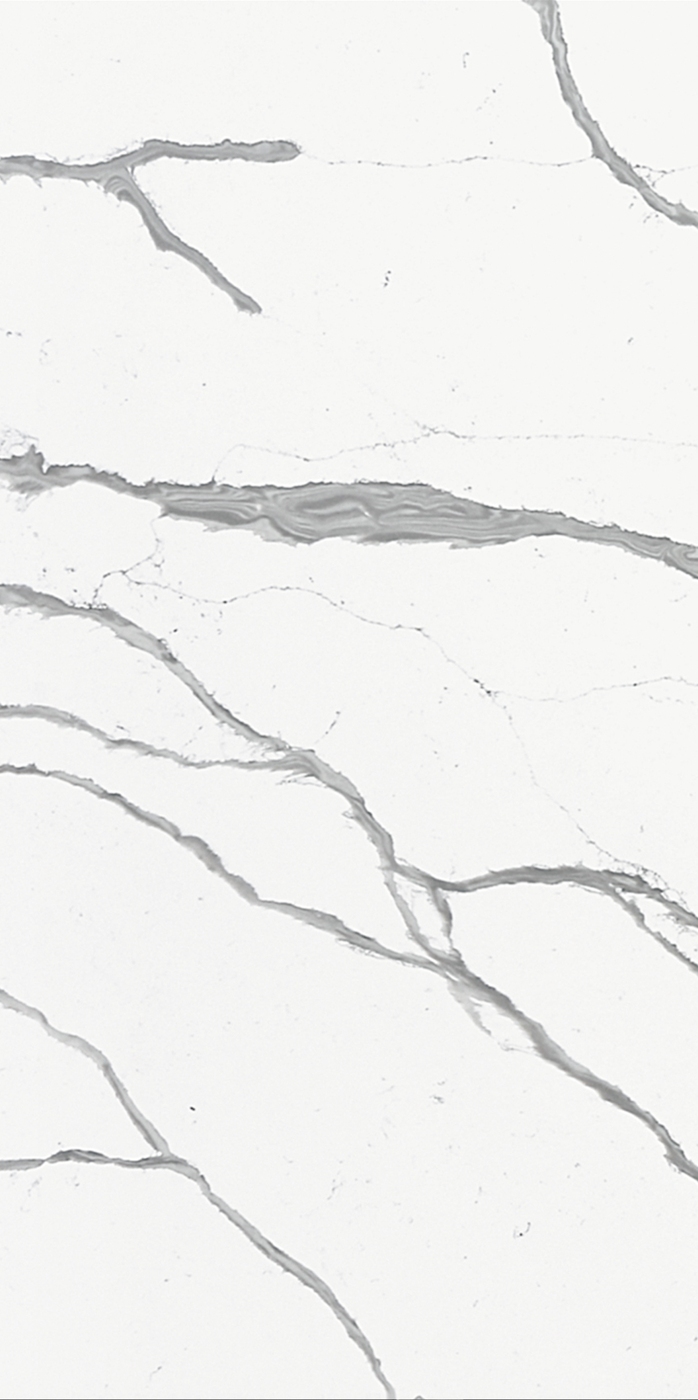
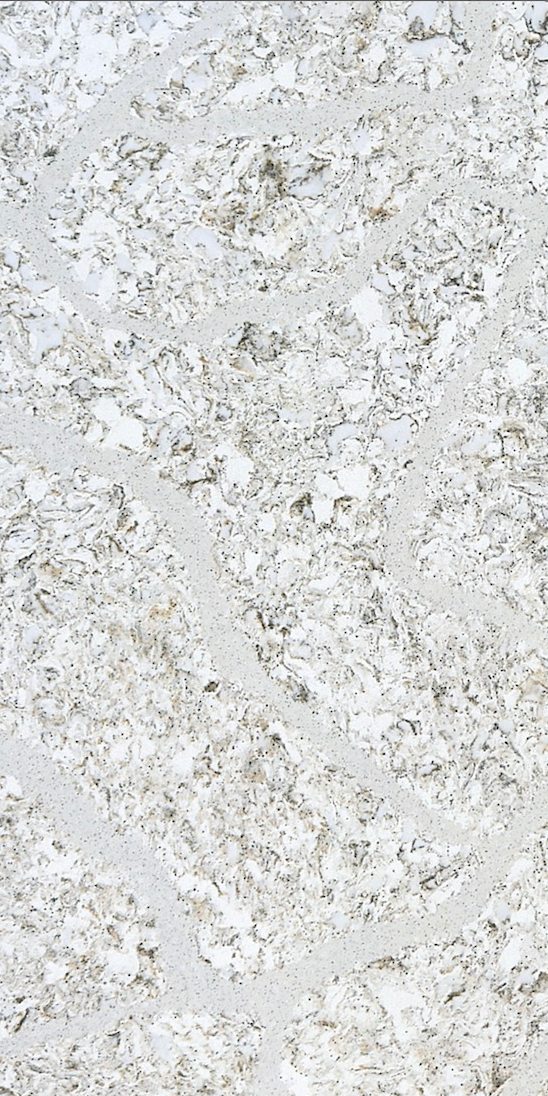
Walk into a modern kitchen or a hotel lobby and you will notice one thing first: the surfaces feel calm and continuous. No busy grout lines, no chopped up pieces, just big clean planes that make the space look larger and more expensive. That look is not luck. It is usually planned around quartz slabs, especially large format quartz slabs, because they give you long runs of material with consistent color and pattern.
Here we will explain how people actually use quartz slabs to get that "seamless" effect, where seams are either hidden or placed so smartly you barely notice. We will also share practical planning tips that homeowners, designers, and fabricators use on real projects, from quartz countertops to waterfall island quartz, full height quartz backsplash, and even quartz wall panels.
Quartz is an engineered stone, made from natural quartz with resins and pigments. The reason it is popular for big surfaces is pretty simple:
● Uniform pattern control: You can get clean, consistent looks like white, gray, beige, or soft concrete tones. It is easier to match pieces than many natural stones.
● Low maintenance: Many people choose quartz because it is easy to clean, great for daily use, and does not need the same kind of sealing schedule as some stones.
● Design variety: You can go minimal, marble look, bold veining, or industrial style. That makes it easier to build a "single material" story across countertops, backsplash, and walls.
● Reliable sizing: With jumbo quartz slabs and large format quartz slabs, designers can cover more area with fewer joins.
Seamless does not mean "zero seams" in most real installations. It usually means fewer seams, and seams that are placed where your eye does not land.

A lot of people start by picking a color first. Then later they find out the island is too long, or the backsplash needs a seam right in the middle of the stove. For a seamless look, do the opposite.
Typical areas where seams matter most:
● The main run of quartz kitchen countertops
● The island, especially a waterfall island quartz
● Full height quartz backsplash behind the range
● Shower walls or quartz wall panels in a bathroom
● Reception desk fronts and lobby feature walls in commercial spaces
Once you have these measurements, check what slab sizes your supplier offers. Large format options help reduce seams, but you still need to plan around cutouts, edges, and transportation.
Stand where people will naturally look: kitchen entry, dining seat, stove area, living room sightline. Seams that land in a corner or behind a tall faucet are less noticeable than seams across the middle of a clean wall.
If you want a marble look with veins, you should decide early whether you want bookmatching, vein matching, or a calmer, more blended look.
● For a seamless effect, many designers prefer subtle veining quartz slab styles rather than dramatic veins that "break" at a seam.
● If you do want strong veining, ask your fabricator about layout. Sometimes the best approach is to align the vein through the seam, other times you hide the seam at a natural pattern change.
● Polished quartz reflects light, which can highlight seams if they are not perfect, but it also looks bright and clean.
● Honed quartz is softer and can hide small joint lines better. It also feels modern and less shiny.
Common thicknesses include 2cm and 3cm, but this depends on region and cabinet style.
A trick used in high end projects: use a thicker edge build up so the countertop looks more solid while keeping the slab manageable. It does not remove seams, but it improves the "big piece" feeling.
Even with large format slabs, seams happen because of L shaped counters, long spans, cooktop cutouts, and handling limits. The goal is to make seams quiet
Good Seam Locations
● At inside corners
● At the edge of an appliance opening
● Near a sink cutout (if it is structurally needed)
● Under a cabinet line or shadow line
● At a natural break in the design, like where the countertop meets a tall pantry
Bad Seam Locations
● In the center of a waterfall panel
● Right behind the cooktop, dead center
● Across the front of an island where people sit
● Across a feature wall where lighting hits straight on
Ask your fabricator to show a seam drawing. A simple sketch with seam placement saves a lot of pain later.
For most kitchens, the biggest impact is a clean countertop run. To make it look seamless:
● Choose a slab with a calmer pattern if you want seams to disappear.
● Keep the seam away from the strongest light source, like a window side where daylight hits hard.
● Use a good seam adhesive tint. This sounds small, but if the glue line is too dark or too white, your eye catches it.
If your island is extra long, consider a layout where the seam sits under the cooktop or sink area. Cutouts break the visual plane, so seams are easier to hide there.
A waterfall edge is where seams become more visible, because you see the vertical panel close up.
Tips that work in real homes:
● Use mitered corners carefully. A clean miter makes the edge look like one thick piece.
● Match the pattern through the corner if the slab has veins.
● Avoid placing a seam mid panel. If the waterfall needs two pieces due to height, try to place the seam low, near the floor shadow.
A full height quartz backsplash looks amazing because it removes grout lines and makes the kitchen feel taller. But it requires planning.
● Decide early if outlets will be in the slab or under cabinets.
● For a range wall, consider a single large panel behind the hood and cooktop. If a seam is needed, place it near a cabinet edge.
● Use the same slab batch as the countertop when possible. It helps the color and movement feel consistent.
Quartz is used in bathrooms for vanity tops and wall panels. For a spa feel, fewer seams is the goal.
● For shower walls, large panels mean fewer vertical joints.
● If you are doing a niche, plan the cuts so the niche edges do not create awkward tiny strips.
● Think about slip resistance on floors. Quartz is common for walls and vanities, but for shower floors people often choose tile for grip. Some projects use smaller pieces or textured finishes.
Hotels, offices, malls, and showrooms love quartz wall panels and quartz wall cladding because it looks premium and holds up.
For commercial large format:
● Plan panel joints to align with lighting tracks or architectural lines.
● Use consistent panel orientation so the wall does not look patchy.
● Ask about quartz slab supplier support, like batch control and repeat orders, because commercial sites may need replacements later.
Even the best slab looks bad if fabrication is rushed.
A fabricator using digital templating and CNC cutting can place seams more accurately, especially around corners and appliances. It also helps keep the seam gap tight and even.
● Tight seam with minimal gap
● Adhesive color matched to slab
● Flat surface, no lip between pieces
● Good support under the seam, especially on islands
For undermount sinks, the sink cutout becomes a visual focal point. A clean polish on the inside edge, plus correct support, keeps the area looking "one piece" rather than patched together.
Large format slabs are heavy. A design can look great on paper but fail on delivery day.
Before finalizing, confirm:
● Elevator and hallway access for jumbo pieces
● Turning radius for large panels
● On site lifting equipment (suction cups, A frames, dollies)
● Whether the slab needs to be brought in before door frames or kitchen islands are installed
This is another reason to work with a reliable quartz slab manufacturer or supplier network that understands logistics, not just the material.
If you want the true large format effect, repeat the same quartz across multiple elements:
● Countertop plus waterfall panel
● Countertop plus full height backsplash
● Vanity plus shower wall accent
● Reception desk front plus wall feature
Using one material family reduces visual clutter. It also makes seams less obvious because the eye reads the whole space as one continuous surface story.
If you are aiming for a seamless, large-format look, supplier choice matters. You need stable slab sizing, consistent pattern control, and options that fit kitchens and commercial builds.
Summerly Quartz is a good choice to consider for:
● large format quartz slabs suitable for wide islands and tall backsplashes
● modern marble look styles and clean solid colors
● projects that need a dependable quartz slab supplier and a clear product series for matching
If you are planning a kitchen remodel, a hotel lobby wall, or a full height backsplash feature, it is worth checking Summerly Quartz collections and asking for slab photos, available sizes, and batch info. It saves time, and it helps you design with fewer compromises.
Super Jumbo Quartz Slabs Manufacturer in China
Using quartz slabs for seamless, large-format design comes down to a few real decisions: pick slab size based on your biggest surfaces, plan seams around sightlines, choose patterns that match your seam strategy, and work with a fabricator who cares about layout and adhesive details. When all of that is done right, your countertops, waterfall edges, and full height backsplash can feel like one continuous piece.
If you want to make that process easier, start with a supplier built for large-format work. Summerly Quartz offers options that fit seamless looks, from quartz countertops to quartz wall panels. Explore Summerly Quartz slabs and ask for layout guidance so you can turn your design into a clean, calm, large-format reality.